
How To Grow Daphnia For The Aquarium
The benefits of feeding live food to fish a community tank are many: live food will improve vigor and color, and more closely resemble the food found in the fish's natural habitat. Live food is easily obtained.
Some drawbacks include the transmission of diseases or parasites to the aquarium, it is time consuming to maintain the cultures, and a lot of space needs to be devoted to raising live foods. The cost of equipment and supplies needed to maintain cultures is also a consideration for the beginner.
In this article I will discuss how to raise Daphnia. Daphnia belong to a group known as the Daphniidae, and are close relatives of the freshwater shrimp, and the brine shrimp (Artemia). Their generic name is generally referred to as "water flea." This common name is derived from the jerky movements of Daphnia in the water. The over 150 different species can be found in North America, with a similar amount of species growing in Europe. Some of these species find common ground on both continents.
Daphnia are a small crustacean, and are great to use as a fresh food because they will exist in the tank water until eaten by the fish. Daphnia can also be sterilized if it is felt necessary by placing in a 5% solution of Clorox for 3 to 5 minutes. Very few micro-organisms can survive this. Be sure, however, to rinse them thoroughly before feeding!
Daphnia can be raised both indoors and outside. Many people raise daphnia in a small children's wading pool. A more controlled environment, however, is done indoors, and can be done round if one lives in northern climes. This can be as simple as a couple of two liter bottles, to a 20 gallon tub purchased from a store such as Menard's. The ideal situation is to have as much oxygenated surface area as possible, so if there is room for a larger container, by all means use it. A shallower environment suits daphnia best for prolific growth.
Setting up the environment for daphnia is quite simple. Many methods are used for collecting the water to use for the culture. The best advice I have heard is from Joe F. of Circle City Aquarium Club in Indianapolis, IN. He gave a presentation at the August meeting of Southwestern Michigan Aquarium Society, and recommends using tank water saved from a tank change. Joe has been raising live foods for a long time, and has had good success. His video presentation was top notch.
PH levels for successful Daphnia cultures should be in the range of 6-8, and should be more alkaline than acidic. If raised outdoors, no aeration is needed. If raised indoors, aeration should be adjusted to produce large bubbles. Small bubbles in the daphnia culture will cause the bubbles to become lodged in the carapace of the culture, and they will die.
Water temperatures for Daphnia magna are not a requirement, but the optimal temperature should be in the 64-72 degree range. they are very tolerant to changes in temperature, and can withstand fluctuations down to freezing. In fact, Daphnia can be frozen and kept in the freezer, and revived when needed. Moina withstand a higher fluctuation in temperature than do D. magna.
Lighting should be in the neighborhood of eight or more hours light per day and light intensity equal to or greater than 850 lux. A simple light and a timer can accomplish this indoors.
Feeding the Daphnia is where most aquarists fail. Daphnia feed on dissolved organic matter, yeast, various groups of bacteria, microalgae, and detritus, or mulm. Organic fertilizers, such as fresh cow manure. It is not recommended by our breeder, though, because of the antibiotics and supplements fed to dairy and beef cattle. A much better mixture is a combination of one tablespoon each of spirulina, soy flour, and active dry yeast, added to a pint of water. This mixture should be added so that the water is cloudy, but you are able to see the bottom clearly, and observe the Daphnia swimming in the culture. This mixture should be added carefully every two or three days, being careful not to over feed. At this time, you should see an abundance of Daphnia, and they can be harvested to feed your fish.
Harvesting is quite simple - simply use a small aquarium net, observing that the smaller Daphnia fall through the netting to grow further. In this way, the adults are harvested, and can be fed to your fish. The younger Daphnia can go on to produce still more fish food. Harvested Daphnia can be kept in the refrigerator for several days in clean water.
Daphnia are high in protein, and a very good diet for tropical fish. Some aquarists feed them exclusively. They provide up to 70% protein to your tropical fish, and are an excellent source of live food for the aquarium.
Showing posts with label Information. Show all posts
Showing posts with label Information. Show all posts
A How to guide to DIY CO2 injection system for your aquatic plants
INTRODUCTION
This article gives instructions for a cheap Do-It-Yourself CO2 injection system. The CO2 is produced by a mixture of sugar, yeast and water, and the setup is constructed entirely from cheap and readily available materials. Thanks go to Brian R Silverstein (silverst-at-armstrong.ecn.purdue.edu) for posting a description of his setup, which initially used sourdough starter. His message got me started and much of the information below comes from his postings. Not surprisingly, Brian thanks Ulli Kaeufl (hukaufl-at-eso.org) & George Booth (booth-at-hplvec.LVLD.HP.COM). Finally, a big thanks go to the many participants of the Usenet *.aquaria newsgroups, where this topic has been discussed many times, and numerous persons report positive results using this system.
Warning: This setup may not be suitable for everyone. It requires regular fiddling and the uncertain CO2 injection rate may lead to pH fluctuations that can kill fish (especially if you have soft water). My water is fairly hard (GH 140-180 ppm) and the pH varies from 7.8 with no CO2 to 7.0 with CO2. Read the FAQ on plants and CO2 injection before attempting this. CO2 is an important contributor to robust plant growth, but it is advisable to understand the big picture before going this route. It is particularly important to understand the relationship between pH, CO2 concentration and carbonate hardness. Note also that CO2 injection is a complete waste of time if one has inadequate light, as is typically the case with single-tube strip lights sold at most aquarium stores. One bulb usually produces an insufficient quantity of light, and typical bulbs do not produce the "full spectrum" of light plants require.
On the other hand, the described set up is an inexpensive way to observe first hand the benefits of CO2 injection on plant growth. I personally had never seen what CO2 could do for a tank before trying it myself, and would probably never have purchased a conventional CO2 injection system because of the high cost. In fact, I still haven't purchased one. I find the yeast method adequate for my current needs. I have been using it now for 8 months and have managed to acquire and successfully grow over 25 species of plants with only a handful of failures. Here are the steps.
CONSTRUCTING A CO2 GENERATOR
The first step is to create a CO2 generator. I use a 2-liter plastic soft-drink container. The "hard" part is attaching a hose to the container so that the CO2 doesn't leak out on its way to your aquarium. I use a number 3 rubber stopper with a 1/4 inch hole in the middle. A short segment of 1/4 inch copper tubing goes through the hole and connects to regular air hose tubing. I bought a stopper and copper tube from a campus chemical supply store for $ .45.
Note: Other folks have had success attaching the tube directly to the resealable cap. Simply poke or drill a hole through the cap, stick the tubing through it and seal it with the aquarium silicone sealer. The variations are endless.
BUILDING A CO2 REACTOR
The second step is to create a CO2 reactor for trapping and dissolving the CO2 bubbles before they escape to the surface of your aquarium. Note: For the first few weeks, I simply placed an airstone at the bottom of the tank and let the CO2 bubble to the surface. While inefficient, enough CO2 dissolved to make my plants grow noticably faster. Use of an airstone is suggested because the increased surface area of many small bubbles helps dissolve the CO2 faster.
More recently, I constructed a "sophisticated" reactor. The idea is to trap the rising CO2 bubbles before they reach the surface and escape. Doing so provides two benefits. First, less escaping CO2 means more CO2 in your tank. Second, the trapped CO2 bubbles act as a (very!) crude gauge of how much CO2 you have in your tank. If a lot of CO2 is trapped, the amount of dissolved CO2 in your tank is likely to be high. If little CO2 is trapped, your rig may not be producing CO2 at a high enough rate to replace that used by plants or escaping from your tank.
My reactor consists of a small clear plastic bowl that flower pots are placed on ($0.40 at any gardening store). I cut it in half, glued a clear piece of plastic to it and wedged it between the filter tube and aquarium glass just below one of the powerheads. The cutaway portion faces down creating a trap for rising CO2 bubbles. It is best to use clear plastic so that you can see how much CO2 is accumulating in the reactor.
Other folks have had success with a more sophisticated reactor that actually circulates water in the reactor in order to dissolve the CO2 faster. A nice reactor can be made from the wide end of a gravel cleaner. The 1/2 inch tubing attached to such cleaners connects directly to the exit of many powerheads. The reactor catches the CO2 bubbles, while the water from the powerhead churns and dissolves the CO2 and then flows into the tank.
Tetra also markets a "CO2 Bell", a simple reactor with suction cups that attach to the side of the tank. Since it is ready to go, it is the easiest to use, but finding them at local stores may be problematical, since few stores seem to market CO2 injection related products.
If you use a cannister filter, another possibility is to let the CO2 bubble into the filter intake. The CO2 will completely dissolve by the time it exits the filter. The "gravel cleaner" reactor described above can be used to catch the CO2 with the hose connecting it to the filter intake.
A SOURCE FOR CO2
The third step is to create CO2. I mix 3/4 cup sugar, 6 cups water and a pinch of yeast (roughly 1 teaspoon does the trick). The exact ratio of ingredients is not critical. For example, I use enough water to fill the bottle to about 3 inches from the top. You don't want to get the mixture too full, as the mixture may foam a bit, and you don't want the foam flowing into your tank.
Using the above mixture, I regularly get 10-14 days of strong CO2 production, at a rate of one bubble every 3-7 seconds. When the system stops bubbling (the drop in gas production is often precipitous), dump out everything and mix up a new concoction.
HINTS & DISCUSSION
1) I doesn't hurt to shake the mixture every 2-3 days. Early on it seemed to me that a mixture produced CO2 longer if I shook it every couple of days or so, but I am no longer sure that this is actually the case. (Note: it will be difficult to shake the mixture if it is too full!).
2) Hot water contracts when cooled. Actually, the hot air trapped in your rig contracts when cooled. If your mixture is warmer than room temperature, it may suck water out of your tank before it starts producing enough CO2 to reverse the flow. If your CO2 rig sits below your aquarium, bad things could happen.
One way to prevent problems is to insert a standard air valve between the mixture and the airstone. Right after mixing up a new batch, close the valve. Once the rig is producing CO2 again, open the valve.
Rather than bother with a valve, I simply keep a spare 2-liter bottle on hand. When the current batch looks like it's starting to peter out (or before, if you don't want to have your tank's pH go up as CO2 production wanes), mix up a new batch, but don't connect it right away. Let it sit in a corner for 12-24 hours and then hook up the new mixture when you know it's going strong. That way there is no interruption in CO2 flow through your tank.
Another possibility is to connect two separate mixtures together using gang valves (e.g., use a T-connector to attach both mixtures to the same airstone). Then, mix up a new batch in one rig while the other one is still going. The idea is to always have one of the mixtures going at full steam so that when one mixture quits, the other produces enough CO2 to keep your plants happy.
3) Hot water kills yeast. If you dissolve yeast in hot water (like what comes out of my gas water heater), you probably won't get any CO2 from your setup. If you've mixed things up properly, you should get CO2 production within a few hours, possibly more quickly; I've sometimes had things going 30 minutes after mixing a new batch. Here's what I do:
Fill a 2 cup measuring cup with hot water, and dissolve the sugar in it. If you use a cup with a spout, you can pour the mixture directly into the soda bottle without a funnel (one less gadget to clean!)
Add three more cups of cold water to the mixture and shake it up.
Dissolve the yeast in a cup of cold water and add to mixture. I've only used bakers yeast, but others should work too.
Add more cold water to mixture to fill to desired level. Shake the mixture well.
Let sit at room temperature for a few hours until the mixture reaches room temperature. That's often all the time that is needed to get initial CO2 production going. I feel safer connecting my setup to the tank *after* I know that it is producing gas and won't suck water out of the tank.
4) Some batches of yeast take longer get going than others. For example, yeast stored in a refrigerator takes longer to become active than yeast stored at room temperature. Letting the yeast sit out at room temperature overnight before adding it to your mixture reduces the startup delay. Another suggestion (from homebrewers) is to hydrate the yeast in a cup of warm (80 degree) water for 20 minutes before adding it to the sugar mixture.
5) Nicholas Plummer reports that most people who advocate using a cannister filter as a reactor seem to have Eheims. When he tried bubbling gas into the intake of a fluval 203, the gas made the impeller rattle loudly when a bubble formed at the top of the cannister. He suspects that the slightly poorer design of the Fluval is to blame.
Even without funneling CO2 into the filter, he gets the same effect (but to a lesser degree) late in the day. The water becomes so saturated with oxygen from photosynthesis that it starts to bubble out in the cannister. It reenters solution during the night and is always completely gone by the next morning. Perhaps the slight agitation of the water entering the cannister through an eheim surface extractor causes oxygen to precipitate out of solution.
7) Some folks appear tempted to turn off the CO2 production at night and back on again in the morning. After all, plants consume oxygen at night and produce more CO2. This is a mistake. It is better to keep the tank's CO2 concentration relatively constant because a drop in the dissolved CO2 concentration leads to an increase in pH. Neither plants nor fish seem to appreciate rapid pH swings.
8) Several persons report the appearance of an apparently harmless white film on their CO2 airstones. I have not witnessed this in my tank and am not sure of its cause.
9) I am still experimenting with exact ratios of sugar, yeast and water. In my system, the rate of CO2 production is relatively steady for a number of days, but then drops precipitously (from several bubbles a minute to no production in 24-48 hours). I suspect that the yeast exhausts some trace element or other critical ingredient. Yeast needs a number of elements, including nitrogen (e.g., ammonia but not nitrate), magnesium, phosphorous, potassium, calcium, zinc, iron and copper. My initial hypothesis was that a buildup of alcohol limited yeast production.
However, a homebrewing friend reports that it would take roughly 3.75 cups of sugar in a 2-liter bottle to produce enough alcohol to reach a concentration of 15%, the point at which no strain of yeast can survive. As another data point, I have been running a mixture now for over six weeks that is still producing an adequate amount of CO2. I have no explanation for the longevity of the current mixture. I used the same general recipe that previously worked for only two weeks.
10) It should be possible to culture a new mixture using yeast from a previous batch. Simply save the sludge that collects at the bottom of a mixture. The top layer of sludge, which should be a bit lighter in color, consists of live but dormant yeast cells. The darker layer underneath is dead cells. I have not tried this myself. For more information, look towards the homebrewing field.
RESULTS
After some 15 years of mixed success at growing plants, I now have a jungle. I have to trim the growth in my 55g tank every 1-2 weeks. If I don't, plants completely cover the surface of the tank preventing light from reaching the lower levels. I have so many plants I'm throwing them away! My setup consists of:
55g tank.
2 40W bulbs (two 18-month old tritons).
Temperature held at 78 degrees.
UGF driven by 2 Aquaclear Powerhead 301s.
Layer of floss between gravel and UGF plate.
Some plants in gravel, some in "plant plugs", others in clay/plastic pots containing potting soil.
Hard, alkaline water (tap pH 7.6+, GH 140-190 ppm).
2 corys, 3 kribs, 5 otocinclus affinis, 2 pearl gouramis, 2 blue rams, 4 medium angels and an angelicus cat.
DIY yeast CO2 rig, airstone, and plastic CO2 bubble trap (not connected to powerhead)
Regular addition of trace elements with iron. Without the CO2 rig, the measured CO2 concentration in my tank is about 1-2 ppm (according to the Lamotte CO2 test kit). With the CO2 rig, measured concentration ranges from 5-20 ppm, depending on what my bubble rate is. With CO2 injection, my pH drops from 7.8 to about 7.0 (at a CO2 concentration of 20 ppm). When the CO2 runs out, pH rises again. Warning: The pH change can happen in less than 24 hours, and some fish may suffer. To avoid this problem, hook up a new mixture before the old one has completely run out.
I recently counted over 25 species of plants in my 55g tank. About 15 species I've had for eight months, the rest for about four. Most of the plants are doing extremely well. My major successes include hornwort, vallisneria, pennywort, elodea, foxtail, wisteria, ludwigia, java fern, rotala rotundifolia and both hygro. polysperma and carymbosa, which I throw out regularly.
Other successes include willow moss, several swords, various cryptocorynes, alternanthera lilacinia, rotala macrandra, sagittaria, plus a few things I haven't been able to identify. My anubia nana doubled its size in four months, more growth than the entire previous year. It's growing a new leave every week. Last month, it bloomed for the first time.
Some of the plants are not doing much, but they haven't died and rotted either. Part of the problem is that I don't have enough light reaching the bottom. The faster growing plants outcompete everything else. I have also witnessed a number of plants near the bottom struggling weeks to grow a few inches (even when under direct light), but after reaching a height of four or five inches, growth takes off. I'm convinced now that more light would help.
My only true failure is cabomba. I had it growing very well for 2-3 months (I was throwing it away I had so much), but then growth just stopped. The plants got stringy looking and the leaves fell off. Since then I have learned that I probably don't have enough light for cabomba in my tank and my water is warmer (78 degrees) than ideal.
It is now apparently also the case that my tank doesn't contain enough nitrogen to keep all plants growing at full steam. In the three months since purchasing a sensitive Lamotte nitrate test kit, nitrate levels have always registered zero. It is also apparent that some plants are growing at the expense of others. For example, elodea and foxtail growth was prolific at first, but now grows only slowly.
SUMMARY
In summary, the described sugar, yeast and water CO2 injection system provides an inexpensive way to experiment with CO2 in a plant tank. It is particular attractive to those interested in trying CO2, but skeptical that benefits justify the cost of conventional systems. Although a bit more hassle to maintain than a proper tank-driven injection system, I do not find the burden to be excessive. Although I could afford to purchase the more expensive conventional system, I have little inclination to do so at this point. I spend much more time feeding my fish and trimming plants than I do fiddling with my rig.

Biological Filtration in the aquarium
Aquariums – Biological Filtration
In the aquarium fish world, there are three types of filtration for your tank -- Mechanical, chemical, and biological. A mechanical filter deals with removing particles from the water, while chemical involves exactly what you’d think, using chemicals like carbon to clean, polish, and filter the water. The third type of filtration, biological, is a bit more complex. Biological filtration essentially makes toxic ammonia non-toxic in what is referred to as the nitrogen cycle. In your enclosed aquarium environment, waste materials, including decaying uneaten food and fish excretions, build up and turn into ammonia. This ammonia is harmful and potentially lethal to your fish. In order for the ammonia to be removed from the aquarium, the nitrogen cycle must take place. When the ammonia levels in your aquarium reach a certain level, “good” bacteria from the air settles in the water and starts to form colonies in your filter or rocks. These bacteria convert the ammonia to nitrite. At this time the ammonia levels drop to low levels and the nitrite levels starts to increase. The nitrites in the water are also toxic to fish. When the nitrite level in the water has reached suitable levels another type of “good” bacteria starts to establish colonies in your aquarium. These bacteria convert the nitrites to nitrates, which are less harmful in small quantities and is absorbed by plants or algae. Since the “good” bacteria occur naturally, in order for their growth to occur, all that is required is ammonia and oxygenated water. This is the beginning of the nitrogen process and the growth of bacterial colonies.A biological filter, therefore, usually contains some type of surface area which promotes the growth of these “good” bacteria. Since you need oxygen and a lot of surface area for bacterial colonies, wet/dry filters, sponge filters, ceramic media, and loosely packed upper layers of gravel are all sources for bacterial accumulation. If there is not adequate surface area in oxygen areas of the filter media or gravel, the nitrogen cycle may not occur fast enough to convert the ammonia.
Sexual dimorphism
Sexual dimorphism is the systematic difference in form between individuals of different sex in the same species. Examples include size, color, and the presence or absence of parts of the body used in courtship displays or fights, such as ornamental feathers, horns, antlers or tusks.
Dimorphism comes from two Greek words, di meaning two and morph meaning form. Thus, sexual dimorphism basically refers to two forms of sex, male and female.
Examples
Female Triplewart seadevil, an anglerfish, with male attached near vent (arrow)
Some species of anglerfish also display extreme sexual dimorphism. Females are typical anglerfish, while males are tiny rudimentary creatures with no digestive systems. The males must find a female and fuse with her – he then lives parasitically, becoming little more than a sperm-producing body. A similar situation is found in the Zeus water bug Phoreticovelia disparata where the female has a glandular area on her back that can serve to feed a male that clings to her (though males can survive away from females, they generally are not free-living).
Psychological and behavioral differentiation
Sex steroid-induced differentiation of adult reproductive and other behavior has been demonstrated experimentally in many animals.
Evolution of sexual dimorphism
Handicap principle
The handicap principle is the proposed evolutionary force that gives males of some species traits that at first glance seem to place the organism at a disadvantage.
For example, the bright colouration of male game birds makes them highly visible targets for predators, while the drab females are better camouflaged. Other examples are bird of paradise and lyrebird, whose males have such large plumes that their flight is inhibited. Strong smells, loud cries and singing can also attract predators.
The answer that has been suggested to this apparent paradox is that, at a biological level, the reproductive success of an organism is often more important than duration of life. This is particularly apparent in the case of game birds: a male Common Pheasant in the wild often lives no more than 10 months, with females living twice as long. However, a male pheasant's ability to reproduce depends not on how long he lives but whether females will select him to be their mate.
A brightly coloured and heavily plumed male presumably demonstrates to the female that he is fit in evolutionary terms –
Sexaul dimorphism of the polygamis Northern elephant seal
he has been able to survive in spite of impediments and must therefore be a good choice to father her chicks (especially her daughters, who will have his "fit" genes, but will not be hampered by male plumage). This explanation was first proposed by Amotz Zahavi.
Development of such characters could not at first be explained in terms of simple natural selection. In 1871 Charles Darwin advanced the theory of sexual selection, which related sexual dimorphism with sexual selection.
Polygamy
Comparison of sexual dimorphism in birds and their mating habits shows that the time spent in search for mates, staking territories and mating competes with the demands of taking care of young. For birds and in general, it can be stated that the stronger the dimorphism in a species, the more likely is it to be polygamous and the less is the task of caring for offspring shared among the sexes. This theory is developed by R. L. Trivers' in the parental investment theory. It applies to all ecology.
Livebearers
Live-bearing aquarium fish, often simply called livebearers, are fish that retain the eggs inside the body and give birth to live, free-swimming young. Because the newborn fish are relatively large compared to the fry of oviparous fish, they are easier to feed than the fry of egg-laying species such as characins and cichlids. This makes them much easier to raise, and for this reason, aquarists often recommend them for beginners to fish breeding. In addition, being much larger makes them far less vulnerable to predation, and with sufficient cover, they can sometimes mature in a community tank.
Common aquarium livebearers
Species of interest to aquarists are almost always members of the family Poeciliidae, most commonly guppies, mollies, platies and swordtails.
Rare livebearers
A few other genera from Poeciliidae are kept by advanced aquarists, including Ameca, Brachyrhaphis, Heterandria, and Limia. Other livebearing species kept by aquarists, though far less commonly than the Poeciliidae are the splitfins, family Goodeidae; and the halfbeaks, family Hemirhamphidae; Freshwater stingrays of the family Potamotrygonidae are sometimes kept by advanced aquarists, and these are also livebearers.
None of these are considered to be easy aquarium fish, and some present as much of a challenge to the aquarist as egg-laying fish. Commonly, the problems include providing the right diet and conditions to trigger mating, and ensuring that the female does not miscarry the developing embryos too soon.
Ovoviviparous and viviparous fish compared
Most of the Poeciliidae are ovoviviparous, that is, while the eggs are retained inside the body of the female for protection, the eggs are essentially independent of the mother and she does not provide them with any nutrients. In contrast, fish such as splitfins and halfbeaks are viviparous, with the eggs receiving food from the maternal blood supply through structures analogous to the placenta of placental mammals.
Aberrant livebearers and mouthbrooders
Seahorses and pipefish can be defined as livebearers, although in these cases it is the males that incubate the eggs rather than the females. In many cases, the eggs are dependent on the male for oxygen and nutrition, so these fish can be further defined as viviparous livebearers.
Many cichlids are mouthbrooders, with the female (or more rarely the male) incubating the eggs in the buccal cavity. Compared with other cichlids, these species produce fewer but bigger eggs, and when they emerge the fry are better developed and have a higher survivability. Because the eggs are protected from the environment but do not absorb nutrients from the parent, this condition is analogous to, though not identical with, ovoviviparity.
Robert John Lechmere Guppy
Robert John Lechmere Guppy (born August 15, 1836 in London; died August 5, 1916 in San Fernando, Trinidad and Tobago) was a British-born naturalist after whom the guppy is named. He was one of four children of Robert Guppy, a lawyer, and Amelia Parkinson, a painter and one of the pioneers of photography. "Lechmere," as he was called, was raised by his grandparents, Richard Parkinson and Lucy Lechmere, in Kinnersley Castle, a 13th-century Norman castle in Hereford. He left England at the age of 18 and was shipwrecked on the coast of New Zealand in 1856. After living with the Māoris for two years and mapping the area, Lechmere left New Zealand for Trinidad, where his parents were living. He married Alice Rostant, the daughter of local French creole planters, and became Trinidad's first Superintendent of Schools. Although he had no formal training in the sciences, (he was a civil engineer by trade), Lechmere wrote and published numerous articles on the palaeontology of the region. There is no truth to the rumor that Guppy was also a clergyman. In fact, he was an agnostic.
Guppy Poecilia reticulata
The guppy (Poecilia reticulata), also known as the millionfish, is one of the most popular freshwater aquarium fish species in the world. It is a small member of the Poecilidae family (females 4-6 centimetres long, males 2½–3½ centimetres long) and like all other members of the family, is live-bearing.
Taxonomy
Robert John Lechmere Guppy discovered this tiny fish in Trinidad in 1866, and the fish was named Girardinus guppii in his honour by Albert C. L. G. Gunther later that year. However, the fish had previously been described in America. Although Girardinus guppii is now considered a junior synonym of Poecilia reticulata, the common name "guppy" still remains. (In Trinidad and Tobago, the common name is "crayfish".) Over time guppies have been given a variety of taxonomic names, although Poecilia reticulata is the name currently considered to be valid.
Distribution
Guppies are native to Trinidad and parts of South America, specifically Antigua and Barbuda, Barbados, Brazil, Guyana, Netherlands Antilles, Trinidad and Tobago, the US Virgin Islands, Venezuela.
However, guppies have been introduced to many different countries on all continents, except Antarctica. Sometimes this has occurred accidentally, but most often as a means of mosquito control, the hope being that the guppies would eat the mosquito larvae slowing down the spread of malaria. In many cases, these guppies have had a negative impact on native fish faunas.
Ecology and behavior
Guppies exhibit sexual dimorphism. While wild-type females are grey in body colour, males have splashes, spots, or stripes that can be yellow, orange, blue, red, black, or even purple.
Guppies are often bred for their natural colour, so over the years the domestic guppy has grown weaker. As a result, guppies will sometimes die after 2-3 days. A guppy may not survive a sudden increase or drop in temperature.
There is a great deal of variety between the populations, many with distinctive coloring or patterning. Those that live in habitats where predators are common tend to be less vividly decorated as a protective measure. Populations that deal with fewer predators are much more colorful. Recent studies suggest that vividly colored males are favored via sexual selection (handicap principle) while natural selection via predation favors subdued tones. As a result, the dominant phenotypes observed within a reproductively isolated community are a function of the relative importance each factor has in a particular environment.
Occasionally male guppies may behave aggressively towards each other, engaging in fin-nipping and other bullying behaviour. Guppies live in complex social networks, choosing social partners and remembering them.
Guppies are a seminal species for evolutionary biologists because predation often varies over small geographic areas. Both historical work and recent studies are summarised in Anne Magurran's Evolutionary Ecology: the Trinidadian Guppy.
Reproduction
A baby Guppy in an aquarium at 1 week old
Guppies are highly prolific livebearers. The gestation period of a guppy is 21-30 days, with an average of 28 days. After the female guppy is inseminated, a dark area near the anus, known as the gravid spot, will enlarge and darken. Guppies prefer water temperatures of about 27 °C (82 °F) for reproduction. The female guppy has drops of between 2-100 fry, typically ranging between 30 and 60. From the moment of birth, each fry is fully capable of swimming, eating, and avoiding danger. After giving birth, the female is ready for conception again within only a few hours. In fact, guppies have the ability to store sperm, so the females can give birth many times, after only once breeding with a male.
Young fry take roughly one or two months to reach maturity. In the aquarium, they are usually fed ground flake foods, baby brine shrimp or unless they are put in a separate tank, the babies will eat uneaten food from the adults. In addition, they nibble on algae.
The guppy has been successfully hybridised with various species of molly (poecilia latipinna/velifera), eg male guppy and female molly. However, the hybrids are always males and appear to be infertile.[7] The guppy has also been hybridised with the Endler's livebearer (poecilia wingei) to produce fertile offspring. The adult guppies sometimes eat their fries; some breeders use a breeder cage to prevent this.
In the aquarium
Guppy standards
The guppy prefers a hard water aquarium and can withstand levels of salinity up to 150% that of normal sea water., which has led to them being occasionally included in marine tropical community tanks, as well as in freshwater tropical tanks. Guppies are generally peaceful, though nipping behaviour is sometimes exhibited between male guppies or towards other top swimmers like platys and Swordtails and occasionally other fish with prominent fins such as angelfish. Its most famous characteristic is its propensity for breeding, and it can breed in both fresh water and marine aquariums.
Guppy breeding by Aquarists produces variations in appearance ranging from color consistency to fantails and "spike" Swordtails. Selective breeding has created an avid "fancy guppy" collector group, while the "wild" guppy maintains its popularity as one of the hardiest aquarium fish, as well as a good fish to feed to predator fish as a natural food source.
Experienced Aquarists breeding their own guppies are aware that the adults will eat their young and, therefore, provide safe zones for the fry. Specially designed Livebearer birthing tanks, which can be suspended inside the aquarium, are available from aquatic retailers. These serve the dual purpose of shielding the pregnant female from further attention from the males, and of providing a separate area for the newborn young as protection from being eaten by their mother. However, if a female is put in the breeder box too early or too late it will cause her to have a miscarriage.
See also
Poecilia wingei, the Endler guppy
Micropoecilia picta, the swamp guppy
External links
Poecilia reticulata
Poecilia reticulata (TSN 165903). Integrated Taxonomic Information System. Retrieved on June 8, 2004.
"Poecilia reticulata". FishBase. Ed. Ranier Froese and Daniel Pauly. April 2004 version. N.p.: FishBase, 2004.
References
Eli Agbayani. Common Names of Poecilia reticulata. Retrieved on 2007-04-24.
Eli Agbayani. Synonyms of Poecilia reticulata. Retrieved on 2007-04-24.
Eli Agbayani. Countries where Poecilia reticulata is found. Retrieved on 2007-04-24.
"Poecilia reticulata". FishBase. Ed. Ranier Froese and Daniel Pauly. April 2007 version. N.p.: FishBase, 2007.
Croft, D. P., J. Krause and R. James (2004) Social networks in the guppy (Poecilia reticulata). Proceedings of the Royal Society of London Biology Letters 271: 516-519.
Guppy. Encyclopaedia Britannica. 2007. Encyclopaedia Britannica Online. Retrieved on 2007-05-07.
Ghadially, F. N.; Myron Gordon (1956-12-29). "A Localized Melanoma in a Hybrid Fish Lebistes x Mollienesia" (pdf). Cancer Research: 597–599.
Chervinski, J. (1984) Salinity tolerance of the guppy, Poecilia Reticulata Peters. Journal of Fish Biology 24: 449-452.
Shikano T, and Fujio Y. 1997. Successful propagation in seawater of the guppy Poecilia Reticulata with reference to high salinity tolerance at birth. FISHERIES SCIENCE 63: 573-575
10. Photo of guppy x molly: http://www.hippocampus-bildarchiv.de/tier_4435_PoeciliaHYBRIDE.htm11. Photo of guppy and molly hybrid is documented in book: Innes "Exotic Aquarium Fishes" and Herbert Axelrod "Tropical Fish as a Hobby".
The Aquarium Nitrogen Cycle
People often ask, What is the Nitrogen cyclke and how does it affect my aquarium? Here we have tried to produce a concise guide to help in your understanding;
The nitrogen cycle is by far the most important factor in successful fish keeping without it keeping fish alive for long periods would be difficult if not impossible. Like all living creatures fish give off waste and more than 50% of that waste is in the form of ammonia, the majority of which is secreted from the gills the rest is excreted as fecal matter, decaying plant matter and rotting uneaten food are other sources of ammonia, this ammonia is very toxic to fish and must be broken down or removed from the water.
In nature the large volumes of water per fish take care of diluting ammonia to miniscule proportions, but unfortunately in an aquarium the volume of water per fish is relatively small so ammonia levels can rise rapidly.
Fortunately for the aquarist this is where the nitrogen cycle comes to the rescue, living in the filters are two types of bacteria, the first is nitrosomonas it feeds on ammonia converting it to nitrite (also toxic to fish), nitrite is consumed by a secondary bacteria nitrobacter and converted to nitrate a relatively non toxic compound and the end product of the biological filtration process, nitrate levels will continue to rise unless removed by water changes or it is utilized by living plants.
Now you can’t just put a filter in your tank and expect all this to happen straight away, it takes time to establish good colonies of these bacteria, nitrifying bacteria are present everywhere (in the air) so once there is a source of ammonia it will only be a matter of time before a colony of bacteria is established. The best way to get small amount of ammonia into your aquarium is to add one or two hardy and inexpensive fish. The process of building up good bacteria levels in filters takes 2 to 6 weeks, at temperatures bellow 19 decrease Celsius the process takes much longer, under optimum conditions it takes 15 hours for a bacteria colony to double in size.
During the process ammonia levels in the aquarium will rise then suddenly fall as nitrite-forming bacteria take hold and multiply, the same applies for the nitrate-forming bacteria, nitrite levels will rise as the continually produced ammonia is converted into nitrite, as before these levels will suddenly drop as nitrate-forming bacteria take hold and multiply, now nitrate levels will begin to rise and should be controlled as mentioned before.
It is important to monitor ammonia, nitrite and nitrate levels not only when setting up a new aquarium but on a regular basis, a rise in ammonia or nitrite levels indicate that the filter is clogged and due for cleaning, if these level don’t drop after the filter has been cleaned correctly the filter is to small for the fish load in your aquarium. Excessive nitrate levels indicate the tank is due for a water change.
Black Neon Tetra
Black Neon Tetra
Information and care guide.

The black neon tetra (Hyphessobrycon herbertaxelrodi) is a neon tetra in name only. The true neon tetra is Paracheirodon innesi so you can see from the name that the two, although both in the characin family, are entirely different species.
If you’re unfamiliar with the scientific naming of fishes, one interesting fact about the black neon tetra is that the genus, herbertaxelrodi, is named after Dr. Herbert Axelrod who is one of the world’s foremost experts on aquarium fish. Found in the Mato Grosso area of Brazil, the black neon tetra is a peaceful member of the characin family and an excellent addition to the community tank. Like most other tetras, this 1 ½ to 2-inch fish does best in a small school of its own kind. In a well-planted fish tank with an open area for shoaling, the black neon tetra makes a striking display if given subdued lighting and a dark substrate.The male black neon tetra is more slender than the round-bodied female. The black stripe that extends from the base of the caudal fin all the way to the edge of the gill cover of the black neon’s body is highlighted further by a parallel stripe that ranges from white to a pale, luminescent green.
If you look closely at the black neon, you’ll see that the ebony stripe is bordered with a thin silver line. These characteristics help differentiate this tetra from the black line tetra and also probably attribute to its pseudo-neon look. The black neon’s fins are nearly transparent but for an olive-yellow tinge. Eyes are large and capped with a bright red semi-circle.The black neon tetra is omnivorous like many of its characin cousins and will eat a standard diet of flake food. However, a live food diet begun about two weeks before spawning helps promote successful breeding.
Live foods supplementing the black neon’s diet will also help the tetra maintain optimal color.
src="http://pagead2.googlesyndication.com/pagead/show_ads.js">
The history of fishkeeping
There has been a phenomenal growth of interest in Freshwater Tropical Fishkeeping in recent times. Although past history tells us that there have been booms in the hobby before, only to be followed by slumps. There was a boom in Great Britain after the Second World War, when interest in the hobby increased, this was largely due to better import facilities, which made more species available at lower costs, but alas, this was followed by a slump in the 1950’s, probably due to the many “dabblers” that found their interest waning, and consequently gave up the hobby.
Fortunately there were enough dedicated enthusiasts around to tide us over that difficult period. However, on the continent of Europe, and in the United States at that time, the hobby was flourishing and gathering momentum. Nowadays the aquarium hobby has re-established itself world wide, with a vengeance, and the aquatic industry has become highly organised. It produces a wide range of products and equipment designed to ease the task of fishkeepers, and present day attitudes towards the hobby indicate no sign of decline.
The history of fishkeeping dates back to antiquity, and one can only speculate as to its exact origins. Could it be for instance, that long ago in a distant land, possibly China, that a man took a fish from a pond, or stream, and placed it in a container? Thus becoming the first fishkeeper! Who knows for sure? I think anyone trying to answer this question would only be forming an opinion. It is quite probable that more than any one person was responsible for keeping fishes in captivity for reasons other than for food.
Or maybe it was for this very reason that fishkeeping came about, possibly people were keeping fishes captive prior to eating them, and realised that a closer examination of these creatures afforded them aesthetic pleasure because of their colour, shape, and movement. It is more likely that it happened simultaneously in various places, and over a period of time. Whatever the exact origins, the simple fact remains that these first anonymous enthusiasts initiated a hobby that was to extend its bounds far around the world.
Early records do exist, some of which indicate that Chinese people were keeping Goldfish, as pets, as long ago as a thousand years. One of the earliest formal essays on fishes, The Book of the Vermilion Fish, was written in China in 1596; and somewhat later, Samuel Pepys, in 1665, made a diary reference about the keeping of fishes in the home. However, ichthyology goes back much further than that.
The science of ichthyology, the branch of zoology that studies fishes, represents over 2000 years of observations. These observations were carried out by thousands of dedicated men and women worldwide by practical experience, in a scientific approach, and have been tested over the ages using precision instruments, and mathematical analysis, and are now presented in a structured and systematic manner.
*The written history of ichthyology coincides in general with that of zoology, which takes its start with Aristotle (384-322 B.C.). He had a fairly accurate knowledge of the general structure of fishes, correctly distinguishing them from the aquatic mammals and cetaceans. Aristotle’s information on the habits of fishes, their special adaptations, method and time of propagation has proved to be surprisingly accurate. However, it is not easy to recognize the species with which he was dealing because his idea of a species was vague. He adopted the nomenclature of the local fishermen. It never occurred to Aristotle that local popular names change from generation to generation and from one locality to another. His world of ichthyology was limited to about 115 species, all-living in the Aegean Sea.*
For almost two millennia, generation after generation followed Aristotle’s observations. They copied his works, and lacked any observant interpretations of their own. It was an era when revitalisation was of the essence. This was to take place in the early 16th century, when new and original observations were made, but even then works were limited and confined to specific areas of the globe, and there was indeed some speculation involved.
However, during the 17th century, a new perception that abandoned speculation, and which only dealt with facts, was recognised. This was to reveal that there were many similar anatomical structures throughout the animal world; therefore, the first serious attempt at untangling the chaos that existed was possible by arranging animals into groups that were based on their structure.
It was during the 18th century that ichthyology was to become of age, when the works of a Swedish man named Peter Artedi (1705-1735) were to be recognised as having established the generic concept. His concepts were that the genus represented a group of species that was typically consistent with each other, although, having minor characteristic differences. He then proceeded to group the genera into the “Family” conceptualisation that we know of today.
Carolus Linnaeus (1707-1778) was a close friend of Peter Artedi, and it was Artedi’s system of classification, as historians will agree, that is reflected in the works of Linnaeus (his tenth edition of Systema naturae in (1758), following Artedi’s death. This was to identify every animal and plant by two names. The first was the generic name, and the second one was to identify the species, it was this identification of species that Artedi’s system was weak.
So now, with this new “binomial nomenclature”, every living thing can claim a specific place in the system and be catalogued. This was to be the most important event of the century. However, to list all the names and great works that are accredited to the numerous ichthyologists over time, and to the present day, would without doubt burden most visitors to this web site, and its main concern is not the scientific traits of fishes (albeit a very interesting subject), but more the pursuit of aesthetic pleasure to be had from keeping them as an aquarist.
The fountainhead of fishkeeping may not lie in Great Britain, but the first scientific paper on the theory and practice of the “balanced” aquarium was, it was published in England in 1850. Indeed, in the Victorian era, it was considered quite the fashion to have an aquarium in the home, and although public aquaria were being constructed throughout Europe during this period, it was in England that the first one was opened; this was the “fish house” at London Zoo.
However, by the end of that century Germany was firmly established in the forefront of aquarium culture and was exporting tropical fishes to the USA. This formed the foundation for a nation-wide interest in the hobby that has flourished to this day. In-between the two World Wars tropical fish aquaria became evermore popular, although it could not have been an easy or affordable hobby for the less well off. Because of importation difficulties only a limited number of species would have been available, and these would obviously have been quite expensive.
However, the aftermath of the Second World War saw significant changes, better facilities for import, especially by air, meant that more species were obtainable, and at a more affordable price. Aquatic Societies sprang up Countrywide; memberships of them increased enabling them to have shows and exhibitions, both at National level, as well as local; the number of serious breeders increased; all this gave new momentum to the hobby.
Nevertheless, gloom was waiting around the corner. During the 1950's the growth that was generated after the Second World War was followed by a decline. Many amateurs, who were only superficially involved with the hobby, saw their interest waning and consequently gave up… however, on the continent of Europe, and in the United States at that time; the hobby was flourishing and gathering momentum. Fortunately there were enough dedicated enthusiasts around the United Kingdom to tide us over that difficult period.
I’m glad to say those gloomy days have gone, and the hobby enjoys a new lease of life, it has re-established itself world wide, with a vengeance, gone are the days when one had to heat a slate bottomed aquarium with candles, or aerate the aquarium water from an old inflated car inner-tube, instead the aquatic industry produces a wide range of products and equipment designed to ease the task of fishkeepers, it has become highly organised, and present day attitudes towards the hobby indicate no sign of decline.
Quite often fishes are regarded as “easy pets” to keep, especially by amateurs only superficially involved, or uninitiated in the hobby. Indeed it is true that fishes don’t need to be taken for a walk, they don’t make a noise, and they don’t mess up the house, or even bite the postman. This type of hobbyist thinks that they just need to fill a fish tank (or the ultimate torture chamber, a goldfish bowl), with water, put their newly acquired fish into it, and then feed them a couple of times a day, and that’s all there is to it. They couldn’t be further from the truth.
I’m not saying anyone needs to have a degree on the subject, but the would-be fishkee
per does need an element of knowledge on the “basic principals of aquarium life”. This won’t happen over-night, but this is where this web site comes in, as well as the many books on the subject . It cannot be emphasised enough that these must be read and studied over and over until you have a good understanding of the different aspects of the hobby, before any practical steps are taken.
It’s sad to say that many aspiring fishkeepers new to the hobby assume that they know all there is to know and find it hard to accept advice. As time goes by they find that things are not quite going to plan, plants don’t grow, fishes die, they buy more fishes and they too die, all for no apparent reason to the uninitiated hobbyist. Do people realise that if they bought a puppy, and for no apparent reason it dies, then go out and buy another puppy, and that also dies, and so on, the animal welfare groups would have us locked up (to coin a phrase), so why do people think fishes are any different. This form of cruelty (albeit of ignorance, although this should not be an excuse) is happening all over the world on a regular basis.
It seems to be the assumption (because they are cold blooded creatures) that fishes can’t feel pain, however, they can, although it’s likely that they perceive it differently. It is also regarded that because fishes are relatively inexpensive, and can be readily replaced, their lives are considered of little consequence. You may not be aware, but it is illegal in the UK to cause stress and pain to fish, as it is with other animals.
Each year up to 20% of us leave the hobby, many for reasons given above. What one must realise is, that if things go wrong, and they do, for the experienced as well as for novices, is that we must learn from our mistakes, and not give up because of them. As an animal lover it is a sad experience to lose a fish, as it is any animal. Unfortunately, when a fish dies many hobbyists immediately think that it must be of a pathogenic reason, when in reality one should not jump to conclusions but first of all check out the quality of the fishes environment.
It is far to easy to buy and set up an aquarium, but if you want a “successful aquarium set up” then some knowledge of it’s care is essential. This way the fishes can be kept alive and healthy for many years. Kept properly your fishes should live quite happily for up ten years (although some, by nature, only have short life spans), and some even longer.
Puffer fish kills eight and hospitalises 170
Puffer fish kills eight and hospitalises 170
In the past week suspected puffer fish poisoning has been responsible for killing eight people and hospitalising over 170 more.The eight deaths occurred in Bangladesh in the Narsingdi district where 38 people - including a fishmonger - were affected after eating what locals call potka fish. Six people died at home and a further two in hospital whilst the rest were admitted after falling sick as a result of eating the fish. The local union chairman also reported that crows, cats and dogs had died after eating the skin of the fish.
HospitalisedIn a completely separate incident, 140 people were hospitalised in Thailand after eating a soup with fish balls following a funeral. After the meal, guests started vomiting, complaining of numbness in the tongue and shortness of breath. Doctors believe that the symptoms are indicative of puffer fish poisoning. The fish balls were bought from a local market where although puffer fish has been banned in Thailand as a food since 2002, there is still an active trade for puffer fish where it is passed off as more expensive meats.
Tetraodotoxin
There are thought to be around 120 species of puffer fish. Parts of the fish contain a toxin called tetradotoxin which can be up to 1200 times more poisonous than cyanide. There is enough poison in a single puffer fish to kill 30 people. However, the fish known as fugu in Japan is also considered a delicacy in parts of the world and in Japan chefs have to have a special license to prepare it.Symptoms of tetradotoxin poisoning can occur anything from 15 minutes to several hours later and include numbness, nausea, vomiting, extreme stomach pains and sometimes paralysis and death. There is no known antidote to tetradotoxin poisoning.It’s no all doom and gloom however, this month WEX Pharmaceuticals Inc in Canada have just entered Phase 3 trials of Tectin™ - the active ingredient of which is tetrodotoxin - to treat extreme pain in cancer sufferers and withdrawal symptoms in heroin addicts. Previous trials have shown a 71% success rate in effectively treating pain and suggest that the drug may be as much as 3,000 times as effective as morphine.
Clown Loach Chromobotia macracanthus
CLOWN LOACH
Chromobotia macracanthus
(Bleeker 1852)
Clown loaches are one of the most popular aquarium fishes kept and has been so for a long time, but surprisingly very little is known about them and their biology. It is mainly how they reproduce that is unknown to us. Here I will go through what we actually know about these fish and kill off one or two myths. To finish with I will share my thoughts and ideas about how we are at last going to solve the mystery and get them to breed in the aquarium.
Clown loach, Chromobotia macracanthus.
General:
Clown loaches come from Indonesia and are found in Borneo (Kalimantan) and Sumatra. They live in rivers for the greater part of the year except for the yearly breeding migration when the breeding adults swim up smaller waterways to mate. They live on the waterbed in large numbers or in shoals. Information about maximum size varies up to 40-50 cm. This must be seen as very rare even in the wild and a more normal adult size would be 15-20 cm, age information is said to be over 20 years.
Clown loach belong to the family Cobitidae, Loaches, the order is Cypriniformes, carp like fish. The main characteristic for this family is a spine under each eye which can be erected as a defense mechanism. Clown loaches scientific name is macracanthus which means "large thorn". Even though the spines are not poisonous, it can be very painful to be stuck by them, believe me! A word of warning, loaches spines easily get tangled up in the fishnet, which in the worse case can cause avoidable damage to the fish. The scales of the clown loach are small and difficult to see, which made some aquarists claim that it was "scaleless", which is incorrect, however it does not have scales on its head. Loaches have four pairs of barbels. Colour and body shape is as seen in the photos.

Native home of the Clown loach! The fishing nets in the photo is for catching edible fish, not especially Clown loaches. Photo; Mikael Håkansson
The vast majority of Clown loaches for sale are caught in the wild, around 20 million Clown loaches are exported every year from Indonesia. Some breeding is done mainly in Thailand with the help of hormones to stimulate matings. Raised Clown loach are still quite expensive compared to those that are caught in the wild. Reports that successful hormone induced breeding has been made for example in the Czech Rep., Russia and in Florida, but it is difficult to substantiate these reports. An increase in farmed Clown loaches is of course wished for. Even though the species is not especially threatened because of the numbers caught in the wild, there are reports from certain areas, mainly in Sumatra, that their numbers are decreasing. Indonesia has forbidden the catching of Clown loaches over 15 cm.s for export, this is to protect to spawn ready fish. Even if wild caught fishes can be a threat to some local occurrences, the question on wild caught or not Clown loaches is not so simple, because for those poor families that have fishing as their sole income, the Clown loach gives an imortant economic contribution.
Information is that the catch on Borneo is made generally between the end of March to the beginning of July when the water recedes after the rain period which is from December to February. Some years young fish can be caught in the rain period of January-February. In Sumatra the high season is earlier, from November to January. In earlier years there was often a shortage of Clown loaches in the shops in Autumn and Winter before the catch started, but now they have started to keep fish in fishcorfs, and in the larger cities equipped with aquarium plants in large cement pools, so that now there is a year round availability. Besides, there is an economical gain, the fish grow under this time and the larger the fish the more it is worth.
Catching the wild fish is interesting. You take hollow bamboo cane up to two metres in length and make a little oppening in each segment of the bamboo. The bamboo is then placed in the water and the Loaches hide in there. When the bamboo is lifted out of the water you can then carefully shake out the fish. This method can be a little different from place to place but is on the principal.

Bamboo cane hanging by string along a river in Sumatra. Besides Clown loaches many catfish, for example Chaca bankanensis (below) are caught under the high season from November to January by this method.

Mikael Håkansson who recently visited Jambi in Sumatra to study the catching of aquarium fishes there, stated that they hang bamboo cane in the water from a overhanging tree or from a log used as a float. The later method is used mainly under the really high season, bamboo that hangs from the trees is used all year round. The bamboo is cut down in lengths of around two metres and is allowed to dry for two months, there is a substance or smell in fresh bamboo that evidently the fish do not like.
The fish that are caught for aquarium use are from two to seven-eight cm. Of course larger Clown loaches are cathed by other fishing methods such as nets, but these are eaten by the locals. Clown loaches are not a significant source of food even though they are eaten when caught, it is other larger species of fish that are sought after.
Mikael was told that at the begining of the high season for Clown loaches everybody wants to join in, even "old ladies who can hardly walk get a new lease of life and sit in the boats helping to empty the bamboo traps".

A bambootrap is emptied.
The most well known characteristic of Loaches is that they "click". When they squabble over food or the best place in the hole, they give off a click which is easily heard, sometimes so loud that you think the aquarium has cracked!
Behaviour:
Clown loaches are considered a fish that lives in shoals, but I would rather say that they live in groups. The fish quarrel between one and other in a way tha fish who live in a "real" shoal seldom do. This question is of definition is probably more of academic interest. Under no circumstances should these fish be kept alone, they become very unsure, afraid and sometimes aggressive. They are most suitably kept in groups of 4-5 or more. I have read in several articles that old Clown loaches can become aggressive to other species of fish but I have never noticed this, it could simply be that Loaches have been kept alone or in too small a group.
Clown loaches grow quite fast as youngsters, up to 7-8 cm.s, then their is a conspicous slowing down of the growing speed. Young Clown loaches are lively and inquisitive fish who like to be in the front when it is feeding time. My experiance is that older fish are a little more cautious and like to find a hiding place if possible. Clown loaches sometimes lay and sleep in a way which makes them look like that they have died, sometimes they even lay on their sides. When one investigates, the fish swims away as if nothing had happened. Clown loaches otherwise are incredibly fast when they get up speed and are very skilful dodging stones in rapid currents.

Clown loaches should not be kept singly but in groups of at least 4 or 5.
The most well known characteristic of Loaches is that they "click". When they squabble over food or the best place in the hole, they give off a click which is easily heard, sometimes so loud that you think the aquarium has cracked!
The Aquarium:
A large bottom area is best. Bottom living fish like loaches have no need for high aquariums. Suitable bottom material is aquarium gravel with smaller and larger stones and roots to give a natural environment.
You can try with plants but you have to reckon with a certain loss as Clown loaches like to eat the plants. Swordplants and different Hygrophila-species if you ask a Clown loach are very tasty. Java fern and Anubias manage better, and also vallisneria for example.
The size of the aquarium has to be compatible with the size of the fishes, I do not intend to give any sizes or point any fingers in this case, use common sense. The bigger the better is valid here as it is in most cases concerning aquariums.
Hiding places in the form of holes and caves are good, the fish like to lay in a cave and look out and see what is happening. They happily lay close together, so the holes should be big enough for the whole group at the same time. In my opinion it looks best if the holes are built with larger rounded stones and roots to copy the natural habitat of Clown loaches, but for the fish it does not matter so much what materials you use. I have seen both bricks and grey plastic drainage pipes used which the fish happily used.
Hollow roots can cause problems. I had one such where one of my fish decided to live, to get him out was nearly impossible. I had to wait one week before he decided to come out and I could move them as planned.
The water circulation and filtering is best if set a little higher than in the standard aquarium to be sure of good oxygen flow, no strong stream of water is needed like that in a hillstream aquarium.
Clown loaches make no demands on extreme water elements, normal pH and KH will do excellently. On the other hand one should be careful with extreme water changes, these fish are sensitive to sudden changes in the quality of the water. Frequent small water changes are best. I reccomend changing water at least once every second week, preferably more often.
New names for Botias
Bleeker in 1852 described the Clown loach as Cobitis macracanthus. Later it were moved to the family Botia where they remained until 2004 when the Swiss ichthyologist Maurice Kottelat made them their own family, Chromobotia. In the same work, the family Botia were divided into four smaller families, besides Chromobotia also Yasuhikotakia there the "Mekong loaches" were moved,with modesta, sidthimunki and others. Tiger loaches with among others helodes and hymenophysa were put in the family Syncrossus. Remaining in the family Botia are the "Indian" loaches, for example the Pakistani or "Yoyo" loach, B. Almorhae and B. Striata.

The Blue loach is now called Yasuhikotakia modesta.
Macracanthus
You sometimes see it in the form macracantha instead of macracanthus, according to Sven Kullander of the Swedish Natural history museum there is no doubt that it is macaranthus that is correct.
"Macaranthus in this case is a substantive (large thorn), so it is not changed against the family name, described by Bleeker as Cobitis macracanthus. Because Cobitis is feminine he should have used "macracantha" if he had intended that "macracanthus"should be treated as an adjective (large-thorned)"
Grateful thanks to Sven for this explanation and now we can put an end to this discussion.

Species name macracanthus means "large thorn" which alludes to Clown loaches errecteble spine under each eye.
Diet
It is almost easier to count up what Clown loaches will not eat than what they will eat, they are omnivorous. Rumour has it that they can "clean up" an aquarium from snails, which is nearly true. That I write nearly, is because I have found that they do not eat Malaysian sand snails, which can be recognised by their pointed spiral shaped shell. These snails have a lock which they can close in the shells opening, obviously this is too hard a nut for Clown loaches to crack!
As these are bottom-living omnivorous fish it can be counted on that they eat the animals that live on and in the bottom where they live. Besides snails also crustaceans, worms and larva, for example chironomids, bloodworms, is all likely included in their natural diet. There is usually plenty of small shrimps in tropical freshwater, so probably this is also an important food as is vegetables of different types.
In other words you can feed these fish with everything in the way of food, flakefood, live and frozen animal fodder like mosquito larva, bloodworms, mysis, daphnia, tubifex-worms, etc. Earthworms are delicious but must be cut into suitable sizes first, which some people may think is just too much! Shrimpmix, algae tabletts, fishballs, pellets of different types like salmon, discus or goldfish pellets all work. Brusselsprouts, slices of squash and cucumber parboiled also go down well. Naturally the best way is to feed them food which sinks, but if necessary they can go up in the aquarium and even eat at the top while swimming on their backs. A mixed and varied diet is probably best.
Bloodworms is one of the Clown loaches favourite dishes. A warning, it is not unusual that we can be allergic to these, so if you feel the slightest discomfort, for example itching eyes or develop a skin rash discontinue using this food.
Healthy Clown loaches eat a lot and often, which explains the need for good filtering. Their voracious appetite makes it easy to be tempted to overfeed which soon leads to water decay. Feed small amounts a few times a day so that the fish do not leave any food scraps over, it can get messy especially if you feed shrimpmix or food pellets as Clown loaches do not have good table manners.
Loaches sometimes go into a "feeding frenzy" which means they hysterically throw themselves at the food with an intensive clicking. Eventhough they are usually foodhappy fish, this is something completely different, it looks like they have never been given food before! My fish behave like this between March-May and can possibly have something to do with seasonal change in their original habitat.
Clown loaches enjoy food pellets.
Special problems:
There is a couple of things that you should keep watch for concerning Clown loaches. The most common problem is white-spot, these fish are easily struck down by this disease. This often occurs when the fish have been kept too cold or in newly bought fish after being transported. Habitual fish that are well cared for are not more susceptable than others, in the ten years that I have kept these fish privately, I have only had white-spot once. For safety´s sake always have white-spot medicine at home if you acquire botia, it can save lives. White-spot is easily cured but can be a catastrophy if not treated.
N.B! follow the dosage instructions carefully for all medicines, some medicines recommend half the normal dosage for just loaches, because they can be sensitive to some ingredients, mainly coppercombinations.
Loss of weight or "skinny disease" is also quite common in Clown loaches. Typical symptoms are loss of weight and behaviour known as "knifeback" even though the fish is acting and eating normally. This sickness is more difficult to treat, it comes from a parasite organism (spironucleus) in the intestines of the same type that is thought to cause the so called "discus disease". I have successfully removed this disease from newly imported fish by using Spirohexol from JBL in the form of tablets. I have taken one tablet and crushed it and dissolve it in as little water as possible. I have then used discus granules which have been soaked in the solution. It becomes like a thick porridge after a short time when the food has drawn in the liquid. I then feed this to the sick fishes, after a week it looks like the sickness is gone. For the best possible effect do not feed with any other food. Flagyl (Metronidazole) also helps fight against this sickness but at least here in Sweden it is on prescription and can be a little difficult to come by.
Apart from this Clown loaches are not more susceptible than other fish, the above sickness usually occurs in fish that have been stressed during transport or subjected to other stress factors like cold water or poor aquarium hygiene. Do not buy fish that look emaciated! Well looked after fish are seldom sick. To quote my friend Elisabeth Hallberg; "the best way to avoid sickness is to keep the fish healthy".
Breeding:
There are few phenomena in the hobby of aquariums which is the object to so much rumours and speculations as the breeding of Clown loaches. Sometimetimes articles appear or stories that someone has "found" fry in their aquarium, but no photos or other evidence has ever been presented. This does not say that all reports are a fabrication, but we should still sometimes be doubtful. However, there are a few common traits that we cannot disregard. It is often told about "forgotten" aquariums where suddenly fry appear. If this is true, it can mean that the fish do not nead such strong current to spawn. Other experiences speak against this, see below. Unfortunately you have to say, that it would be more simple if we could find a clear-cut recipe of what we should do.
I have kept Clown loaches for around ten years now and especially intensively the last four-five years. I have tried many different ways to encourage my Clown loaches to spawn, but as yet without success. I have made some conclusions which possibly can inspire others to solve the mystery with these lovely fish, so I thought I would give an account of my thoughts and tips here.
First and foremost, if you read articles in books or publications and in different internet forums there is often the statement that Clown loaches have to be very old and very big to be ready to spawn. On the whole it is difficult to understand how such information can be spread around about a species we know so little about. In any case, I have established that this is not true! According to a fishery study of the Danau Sentarum Wildlife Reserve, fish under 8-10cm.s stay at the usual catching areas during the rainy season while the others migrate. Considering that the speed which they grow, we can come to the conclusion that Clown loaches spawn migrate from their second or possibly third year of age.
By accident (caused by my one and a half year old son and some pulled out contacts to filters in my loach aquarium) a pair of my largest examples died. Because I am of the curious type and one of the fishes looked rather round I opened it up. To my surprise it was full of roe! The fish now lie in alcohol at NRM, the Swedish museum of Natural History in Stockholm if anyone wants to control their size, otherwise you can look at the photo below. The roe distended female, top in the photo is around 10-11 cm. SL? Total length around 15cm., far from the 30cm.s some authors state. So giant fish are not needed for Clown loaches to be mature for spawning, so do not let this discourage you from trying.

Clown loaches with roe!
The most controlled trials that I had carried out and successful to the point that it resulted in the spawn ready female, which is a long way from spawning but still a bit on the way. I began by trying to imitate a little larger river at the end of the dry season and then tried to simulate a "migration" upp in clearer and stronger flowing water.
The aquarium was nearly 200 litres in which I had around ten loaches between 8-12 cms. The bottom layer consisted of gravel, small and larger stones. At one of the short sides of the aquarium was a "filter chamber" built from a 40 x 50cm filter mat which also divided off 20 cm.s of the aquariums length. I had a light water flow (Proportionately, one Fluval 4:, around 1000l/h, it is a little different proprtion with the waterflow when one is keeping such fish.) The water was normal tap water but I added some crushed clay as often in tropical rivers they are rather muddy. The water temperature was quite high, around 30 degrees C.
After a couple of weeks I started to change the cloudy water, lower the temperature to around 27c. and increase the flow of water. After a couple of weeks more when the the water became even clearer, I further increased the flow of water. (Now to four pumps of the same class) and added some alder cones and peat in the filter chamber to get a "more comfortable" water. I also planted some peace lilies in case the fish wanted some vegetation to spawn. Under the whole of this process I fed the fish like an idiot, which meant I had to change half the water at least two times a week, maybe more, except in the beginning when the water quality was supposed to be poorer.
As stated, the fishes never spawned and after about a month more the accident happened, as reported on earlier.
During the work on this article I have had contact with Per-Erik Lingdell who works with insects living in flowing water, he is obviously very serious and has great knowledge how this kind of habitat works and looks like. He told me he actually got fry from Clown loaches but unfotunately could not get them to survive. He used a similar procedure to mine but used stronger flowing water. Above all he had a place where water rushed over little larger stones and there he believed the fish had spawned. He even changed the water condition quicker than what I did. I gave my fish around a month before they were " up in the spawning area". Per-Erik was very knowledgeable and friendly, as loach people mostly are, and I got a lot of suggestions and ideas through my conversation with him.
From the above you can understand that I have not given up, far from it! I have just set up a new and little larger aquarium, around 300 litres. (Sept. 04) where the next attempt at spawning will take place. The measurements are 120x60x40, also quite a large bottom area but not so high. In the filter corner I have made a so called "Hamburg mat filter", where there will be place for some strong filter pumps, Fluval 4 or similar. At the moment only one is in use, I am going to start one at a time to stimulate a stronger water flow. I also have a small outside filter of Eheim ecco brand, mostly to be able to use peat and similar on a controlled basis. All other filter suction is on the inside in the filter corner, as imagine how frustrating it would be if the fish spawned and the roe were sucked up into the filter!

Filter corner. Here you can insert at least four strong pumps if you try a little!
I have an automatic feeder that feeds salmon pellets and discus granules three times daily. I feed delicacies like earthworms or bloodworms when I come home in the evening, often twice with a couple of hours between. I strive after a protein and fat rich diet, I believe this is needed for eventuel roe production. Lighting is of course on a timer so it coincides with my times, it turns on around lunch time and turns off soon after midnight. In the mornings I am too tired and busy with day nursery dropping off and other things to have time to look after the fish.
The aquarium is fitted up with coarse gravel, a little root and some smaller stones, I will fill up with many more stones during "the migration up the river" and maybe at the end also lower the water level to really increase the flow of water.
It is planned that this attempt at spawning shall be on the same model as the first but with some modifications. For example if the fish do not spawn in the strong flowing stream then maybe they will spawn in the quieter water after the small rapids. I have a nice group of eight loaches, the largest is around 13-14cms. The spawning time is in the beginning of the rain season which begins in November-December, so I have a few months to prepare the aquarium and the fish for what is coming, which will, I believe make it easier to hit the target if following the fishes natural rythm for the time of the year. We will have to see how it goes, if it works you are sure to hear about it! Otherwise I will so some other changes and try again, and again and again!
.

A part of my new Clown loach aquarium, as yet still rather sparsely furnished but on "the way to the spawning ground"more will be added. The water is slightly brown in colour due to humus matter from the peat filter.
Now I have told you how I previously thought and what I plan to do. We aquarists are sometimes a little secretive with what we are doing especially if it is ones own small experiments. Don´t be, your experiences can be very valuable for others, it is known that you learn from "failures". You might think that I am totally on the wrong track and you have other thoughts and ideas of how we are to succeed to get these magnificent fish to spawn. Well then, you might be right! There are not many species of fish that are as beautiful, kind and funny as Clown loaches. They really deserve more who will seriously try to break their big mystery!
Subscribe to:
Posts (Atom)
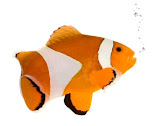
 RSS Feed (xml)


